

Designing Notifications with Empathy
Designing notification systems that engage.

Some time ago, I decided to turn off notifications for the social apps on my phone. Just as an experiment born out of a vague sense of restlessness. What followed was not too surprising, yet still interesting. I began to forget the apps were even there. Even Snapchat, were I keep streaks with friends faded into the background. That was when I re-realized, once again, just how powerful notifications are, in keeping us engaged. Or perhaps, how powerful they are in keeping us tethered.
As a Product designer who has also worked on mobile applications and notification text, this struck a chord. It reminded me of the power of notifications and the psychological effect they have on us. It made me recall that mobile app notifications are designed to capture user attention; yours and mine, and to encourage interaction by using different psychological principles.
One of the most effective of these principles is personalization: tailoring notifications based on user behavior and preferences. This does not just enhance engagement but personalization also helps reduce annoyance. Yet personalization alone isn't enough. Timing is equally powerful, sending notifications when users are likely to be relaxed significantly increases the chance they will respond.
Urgency is another key trigger in notification design, and this is where you play with words, leave this to the UX writers they shine here. With the right language, urgency creates FOMO (Fear of Missing Out), nudging users toward immediate action.
All of this reminded me of what I had to consider when working on a mobile application project (Sulwan), particularly the notification system.
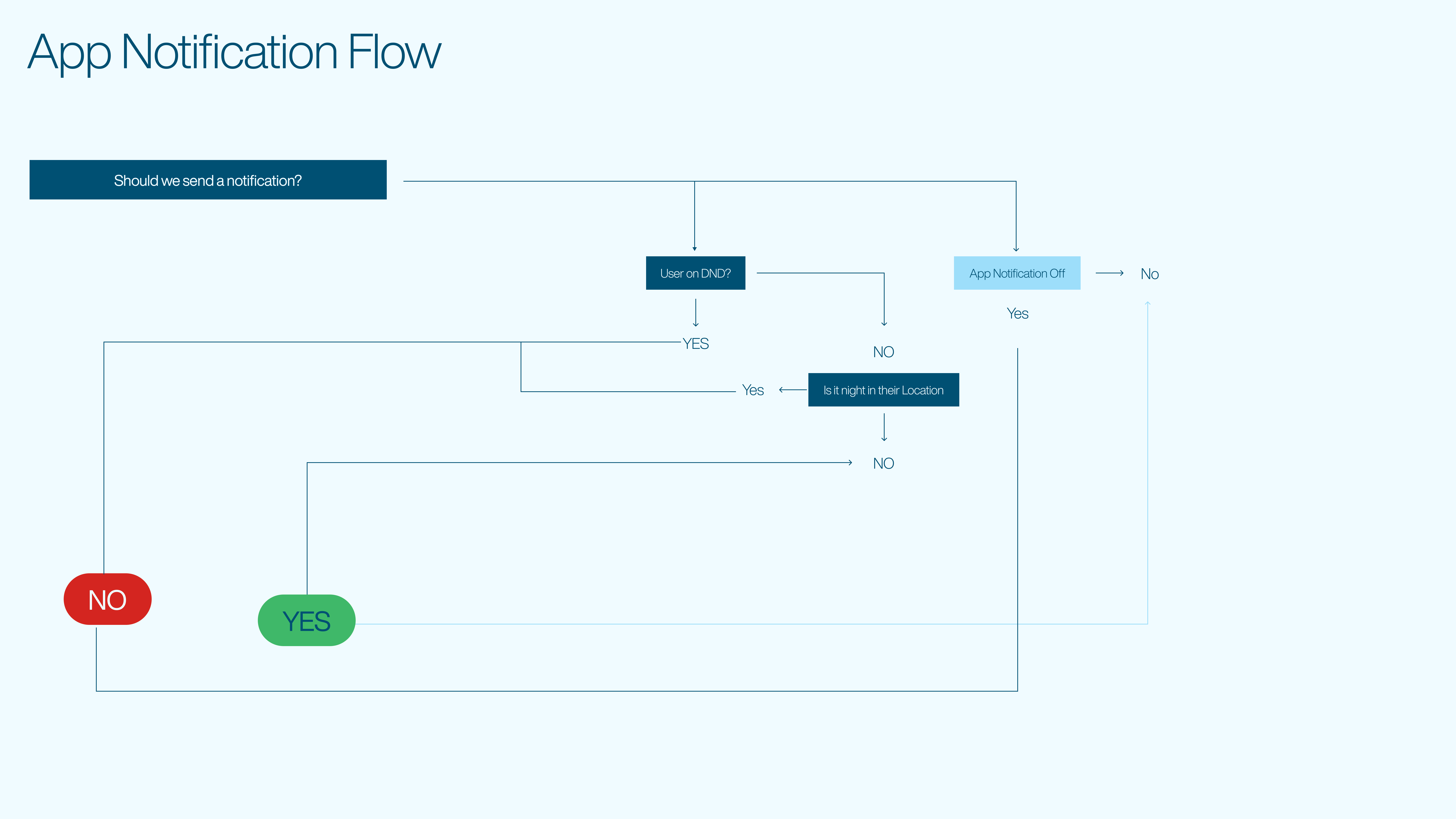
Because it was an Islamic application, the diagram above became even more complex once we began factoring in prayer times, time zones, Involuntary Fasting periods, Ramadan, and other subtle but significant nuances. Each layer added not just introduced new challenges, but also a deeper understanding of how sensitive and thoughtful notification systems need to be. So It quickly became about respect and balance. About designing not to interrupt, but to gently remind.
In many ways, that experience reshaped how I think about digital presence. Notifications are also a form of communication, and like all communication, they carry intent. They can either pull us away from the moment, or can be designed to exist around it.
This is the paradox of modern design. We want users to engage, but we must also protect their space to disengage. The most humane systems, I’ve come to believe, are the ones that know when to speak, and when to stay silent.